The Benefits of Early Childhood Education for Children 0–5
October 8, 2026

Children don’t just play — they learn, communicate, problem-solve, and understand their world through play. From infancy to the preschool years, the way children play evolves naturally, reflecting their growing social skills, imagination, emotional awareness, and independence.
At Starfish Early Learning Centres, play is at the heart of our curriculum. Our educators thoughtfully design environments and experiences that match each child’s developmental stage, helping them feel confident, curious, and capable.
In this guide, we explore the six recognised stages of play and share what each one means for your child’s learning and development.
Originally described by researcher Mildred Parten, the stages of play help us understand how children move from independent exploration to rich social interaction.
Every stage is valuable. Children move through them at their own pace — often revisiting earlier stages as their interests or environment change.
At this early stage, children may seem still or simply observing the world around them, but the learning is immense. They move their arms and legs, look around, and begin to take in sights, sounds, and sensations.
What children learn here:
Starfish ELC’s calm, nurturing indoor environments give infants space to explore safely while building secure attachments with educators.
Children play alone, exploring objects, textures, and movement. This stage builds focus, confidence, and independence.
What children learn here:
Our age-specific rooms allow babies and toddlers to explore at their own pace, with natural materials chosen to spark curiosity.
Children begin watching others play, quietly observing how things work or how peers interact.
What children learn here:
Educators support this stage by modelling positive interactions and gently encouraging participation when children are ready.
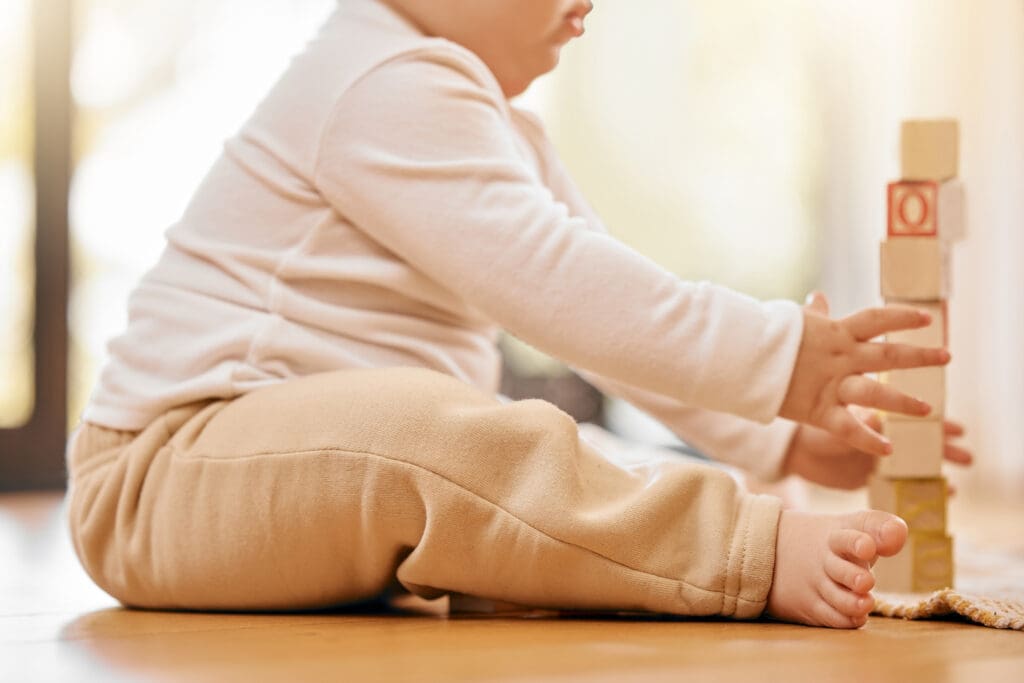
Children play next to others but not yet with them. You might see two toddlers building towers side by side but not interacting directly.
What children learn here:
This is a very normal and important stage. Starfish ELC’s thoughtfully designed indoor and outdoor spaces create opportunities for children to be close to peers while still exploring independently.
Children begin interacting, sharing materials, and talking during play — but their activities may not be fully coordinated.
For example, a group might build with blocks and chat, even if they’re not working toward the same goal.
What children learn here:
Educators gently guide these interactions, helping children express ideas and navigate simple social challenges.
This is the stage many families think of when they picture “playing together.” Children work toward a shared goal — building a tower, role-playing a story, or setting rules for a game.
What children learn here:
Starfish ELC’s 3–5 year kinder program includes many opportunities for this rich, imaginative play, supporting school readiness in a joyful and meaningful way.
Knowing the stages of play gives parents helpful insight into their child’s social and emotional development. It also reassures families that:
Most importantly, it reminds us that play is learning — and children learn best when they feel safe, connected, and free to explore.
Our educators thoughtfully create environments where children can move naturally through each stage, with:
Designed to meet the developmental needs of infants, toddlers, and preschoolers.
Wood, stone, fabric, metal and other open-ended resources encourage exploration.
Children follow their interests while educators extend learning through questions, language, and shared experiences.
Belonging is at the centre of everything we do — children learn best when they feel valued and supported.
We share insights, celebrate milestones, and support families as children grow through each stage.
Each stage of play shapes a child’s social, emotional, cognitive, and physical development. By giving children the space, time, and encouragement to explore, we help them build the confidence and capability they’ll carry into school and beyond.
At Starfish Early Learning Centres, we’re proud to nurture these joyful learning journeys every day — where children can play, discover, and grow in environments designed just for them.
If you’d like to learn more or book a tour, our friendly team is here to help.