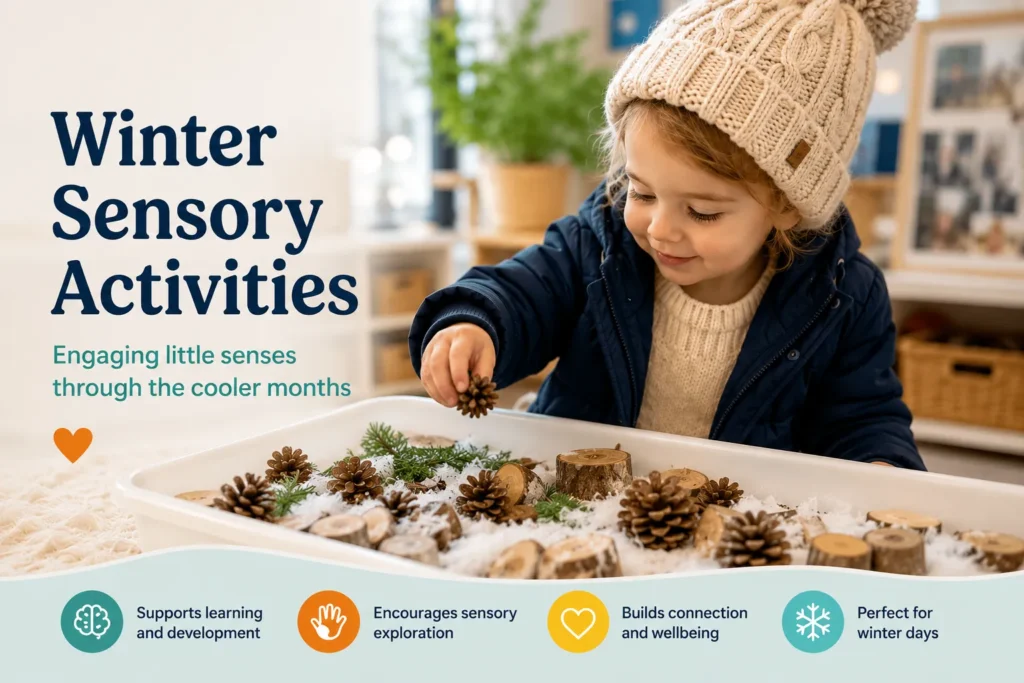
Winter Sensory Activities for Toddlers and Pre-schoolers
April 9th, 2025
Winter in Australia may not bring snow, but it still creates so many lovely opportunities for sensory play. Cooler days, crisp air, puddles, fallen leaves, warm water, soft blankets, and seasonal scents can all invite children to explore the world around them in meaningful ways.
At Starfish Early Learning Centre, we believe children learn best through hands-on experiences that spark curiosity, creativity, and connection. Sensory play is one of the simplest ways to support development while also making everyday moments feel calm, engaging, and fun.
If you are looking for easy winter sensory activities for toddlers and preschoolers, here are some practical ideas to try at home or in an early learning setting.
Why Winter Sensory Activities Matter
Sensory play helps children learn through touch, sight, sound, smell, and movement. It encourages them to notice, compare, describe, and explore, all while building important developmental skills.
Winter sensory activities can support:
fine motor development
language and communication
problem-solving
creativity and imagination
emotional regulation
confidence in new experiences
During the cooler months, these activities can also feel especially comforting. Warm, cosy, and familiar sensory experiences help children feel settled while still giving them plenty of opportunities to learn through play.
This kind of hands-on discovery closely reflects Starfish’s educational philosophy, where children are supported to explore, wonder, and learn in ways that feel meaningful to them.
8 Winter Sensory Activities to Try
1. Warm Water Play
Warm water play is a lovely winter sensory activity and often a favourite for younger children. Fill a shallow tub or container with warm water and add cups, spoons, funnels, or floating toys.
Children can splash, pour, scoop, and transfer water while exploring movement, temperature, and texture. This kind of play supports fine motor skills, concentration, and early problem-solving.
For older children, you can add containers of different sizes and encourage them to compare which ones hold more or less water.
2. Nature Walks on Cool Days
A winter walk can become a sensory adventure when children are encouraged to really notice what is around them. The air feels different in winter, the ground may be damp, and the sounds of wind, rain, and leaves can all become part of the experience.
As you walk, talk about:
what children can hear
what they can smell
what feels rough, smooth, cold, or soft
what colours they can see in nature
Nature walks are a simple way to build observation skills, vocabulary, and confidence outdoors. They also connect beautifully with Starfish’s focus on indoor and outdoor learning environments.
3. Leaf and Nature Collages
Winter is a wonderful season for collecting natural materials such as leaves, bark, twigs, seed pods, and small flowers. Once collected, these can be turned into textured collages or simple craft activities.
This gives children the chance to explore:
different textures
shapes and patterns
fine motor control
creativity through open-ended making
Activities like this are a great example of how children can learn through natural materials and playful exploration.
4. Scented Playdough
Scented playdough is one of the easiest indoor winter sensory activities and can be a very calming experience for young children. Try adding gentle scents such as cinnamon, vanilla, or nutmeg to homemade playdough.
Children can roll, press, squeeze, and shape the dough while noticing how it smells and feels. This supports hand strength, creativity, and sensory awareness all at once.
You can also add natural loose parts such as leaves or sticks to extend the activity in a simple and engaging way.
5. Soft and Cosy Texture Baskets
Create a basket filled with soft winter items such as scarves, fluffy socks, felt pieces, blankets, cotton, or small cushions. Invite children to touch, compare, and describe the textures.
You might ask:
Which one feels the softest?
Which one feels warm?
Which one feels smooth or fluffy?
This is a simple activity, but it can be especially enjoyable for toddlers and helps build descriptive language in a gentle, low-pressure way.
6. Mud and Puddle Play
Cooler weather often brings damp ground and puddles, which makes winter a perfect time for outdoor sensory play. Mud and puddle play gives children the chance to stomp, splash, dig, mix, and explore.
This type of play supports:
gross motor development
sensory exploration
creativity
confidence outdoors
With the right clothing and supervision, messy outdoor play can become one of the most joyful parts of winter.
7. Torch and Shadow Play
With shorter days and darker afternoons, winter is a great time to explore light and shadow indoors. Use a torch in a dim room and encourage children to experiment with shadows on the wall.
They might:
make shapes with their hands
shine light on toys or natural objects
notice how shadows change when the light moves
tell simple stories using shadow shapes
This activity encourages curiosity, imagination, and observation, and it feels a little magical too.
8. Winter Sound Hunts
Winter brings its own special sounds, from rain on windows to wind in the trees and footsteps on wet paths. Go on a listening walk or pause indoors and ask children what they can hear.
You can also create simple sound-making activities using:
homemade rain shakers
bells
tapping sticks
containers filled with rice or lentils
Listening games help children slow down, focus, and build sound awareness in a playful way.
Indoor Winter Sensory Activities for Rainy Days
When the weather keeps everyone inside, sensory play can still be simple and meaningful. Some easy indoor winter sensory activities include:
warm water play
scented playdough
texture baskets
torch and shadow play
sensory bins with rice, lentils, or shredded paper
storytelling with sensory props
The best activities do not need to be complicated. Often, just a few thoughtfully chosen materials are enough to create rich opportunities for learning through play.
Many of these experiences also reflect the types of sensory-rich opportunities included in the Starfish 0-3 Years Program, where children are encouraged to explore through play, movement, creativity, and hands-on discovery.
Tips for Winter Sensory Play
To keep winter sensory activities enjoyable and safe, it helps to:
choose age-appropriate materials
supervise closely, especially with small loose parts
dress children warmly for outdoor play
keep activities simple and low-pressure
follow the child’s interests and pace
Some children love messy or active sensory play, while others prefer quieter experiences such as soft textures or scented playdough. Both are valuable. The goal is to create opportunities for children to explore in ways that feel safe, engaging, and enjoyable.
Making the Most of Winter Through Play
Winter is full of simple sensory experiences that can help children learn, connect, and feel comforted by the world around them. Whether it is splashing in warm water, collecting leaves, jumping in puddles, or exploring cosy textures, these everyday moments can become rich learning opportunities.
At Starfish ELC, we value play-based learning that supports each child’s development in a warm, nurturing environment. If you would like to learn more about our approach, you can explore our About Us page or book a tour to see how we support children through hands-on learning every day.
FAQs
What are winter sensory activities?
Winter sensory activities are play experiences that help children explore the season through touch, sight, sound, smell, and movement. Examples include warm water play, nature walks, playdough, puddle play, and texture exploration.
What are good winter sensory activities for toddlers?
Warm water play, soft texture baskets, simple sensory bins, and puddle play are all great options for toddlers with close supervision.
Can sensory play be done indoors during winter?
Yes. Many winter sensory activities work well indoors, including playdough, water play, shadow play, and textured craft activities.
Why is sensory play important in early childhood?
Sensory play helps children build language, coordination, creativity, confidence, and emotional regulation while learning about the world through hands-on experiences.